Ulysses
By James Joyce
2009


Summary
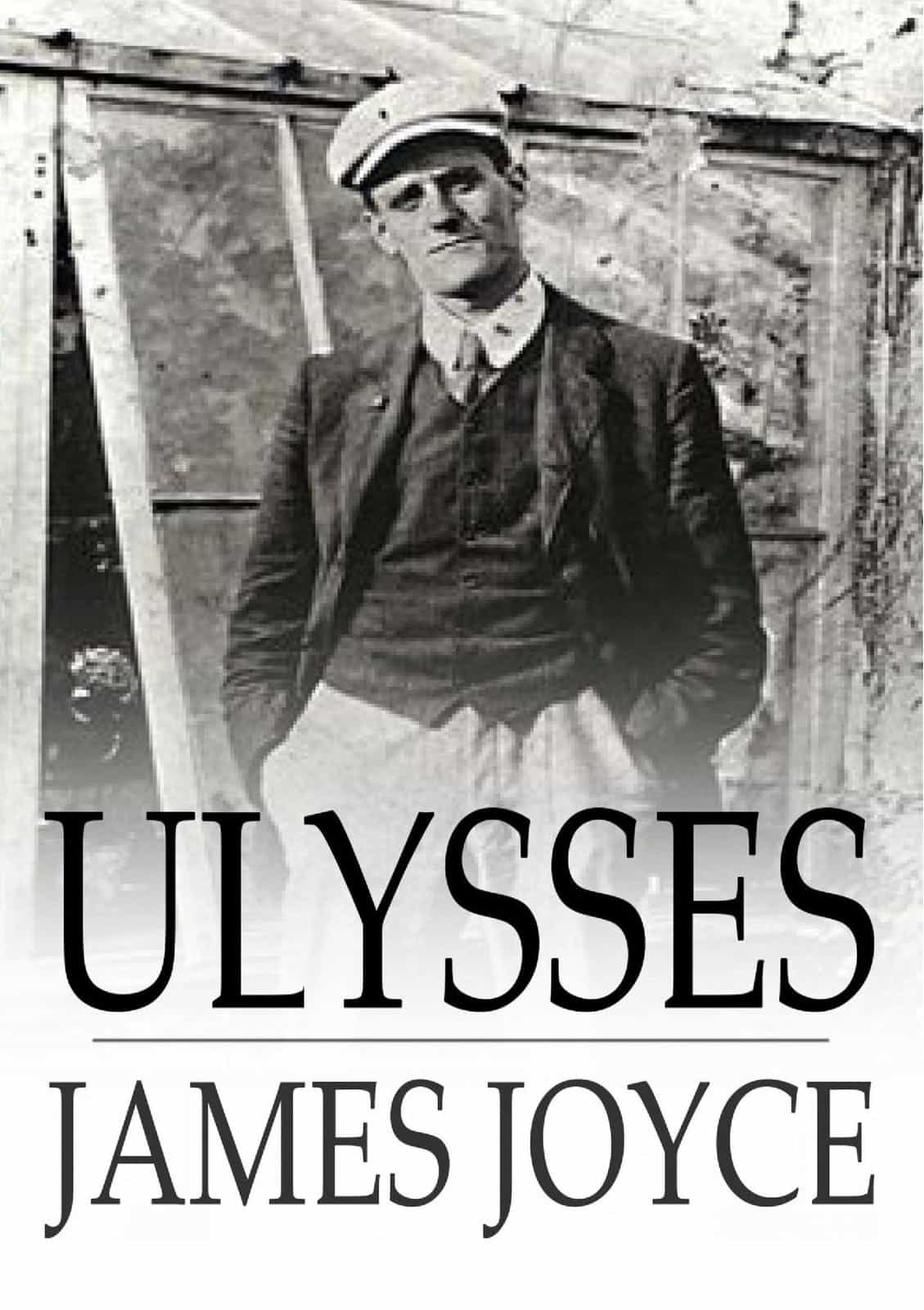
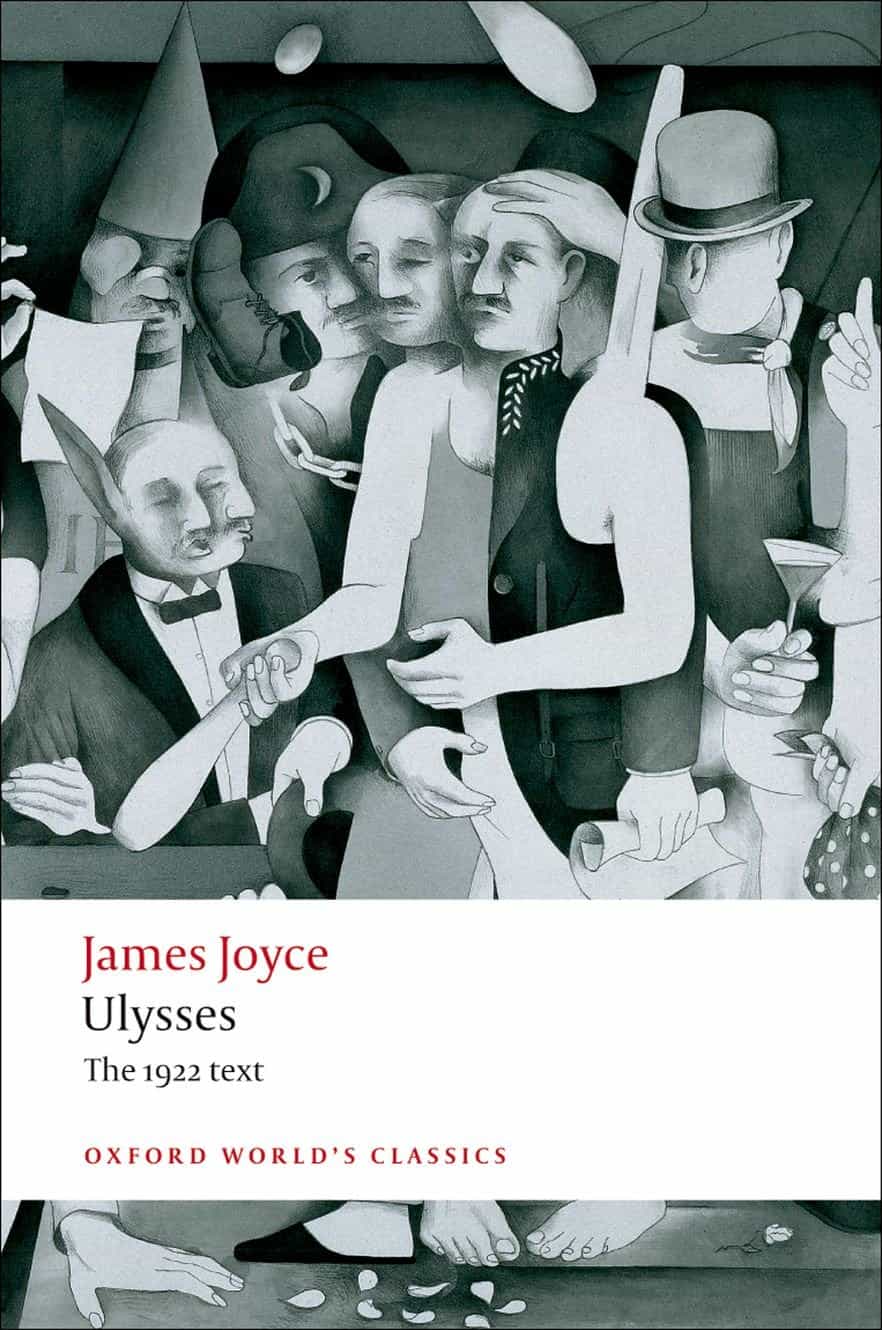
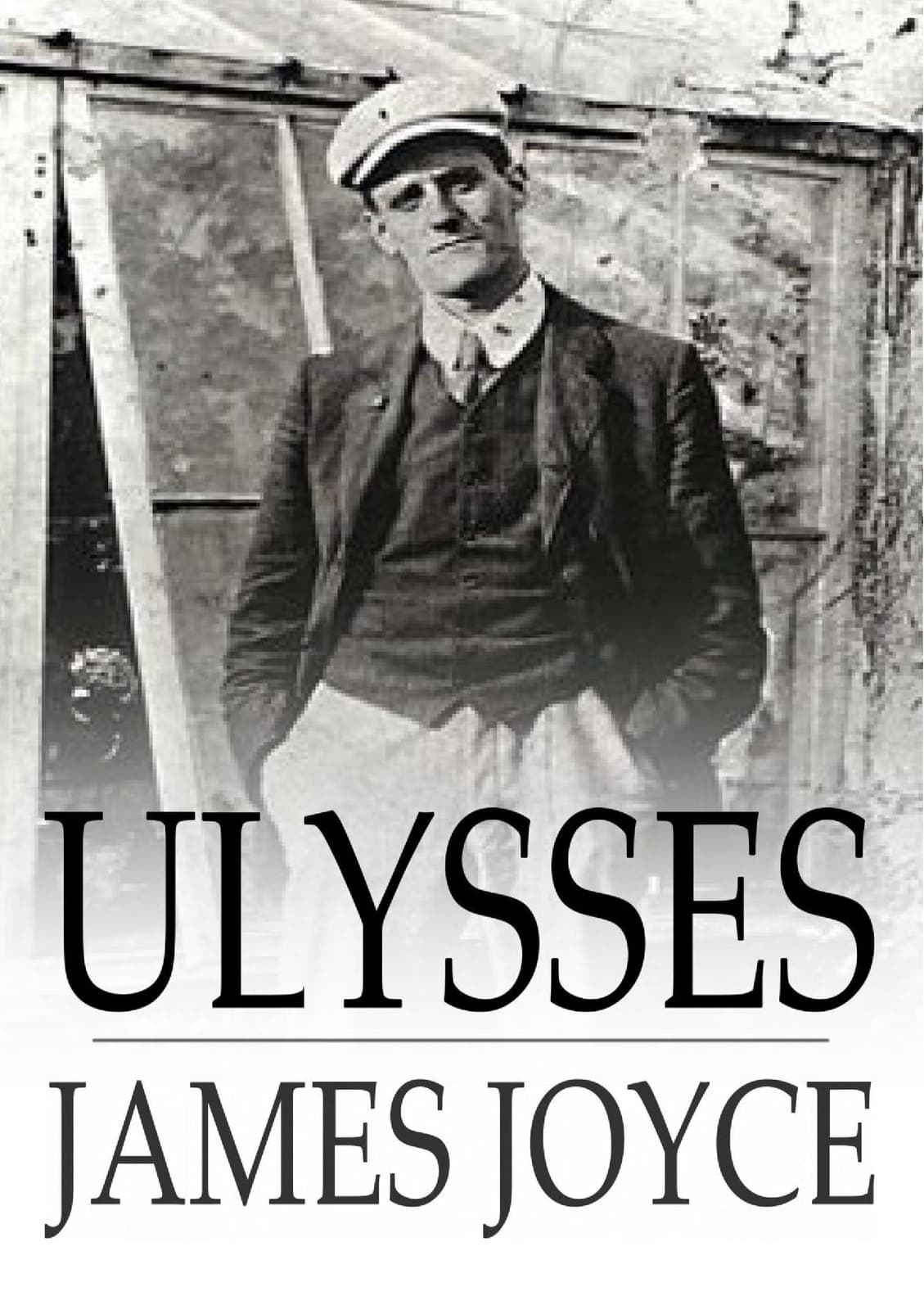
James Joyce's novel Ulysses is said to be one of the most important works in Modernist literature. It details Leopold Bloom's passage through Dublin on an ordinary day: June 16, 1904. Causing controversy, obscenity trials and heated debates, Ulysses is a pioneering work that brims with puns, parodies, allusions, stream-of-consciousness writing and clever structuring. Modern Library ranked it as number one on its list of the twentieth century's 100 greatest English-language novels and Martin Amis called it one of the greatest novels ever written.
Reviews and Comments
2 reviews
James Joyce’s Part I: Telemachia Episode 1, Telemachus At 8 a.m.,Malachi "Buck" Mulligan, a boisterous medical student, calls aspiring writer Stephen Dedalus up to the roof of the Sandycove Martello tower, where they both live. There is tension between Dedalus and Mulligan stemming from a cruel remark Dedalus overheard Mulligan make about his recently deceased mother and from the fact that Mulligan has invited an English student, Haines, to stay with them. The three men eat breakfast and walk to the shore, where Mulligan demands from Stephen the key to the tower and a loan. The three make plans to meet at a pub, The Ship, at 12:30pm. Departing, Stephen decides that he will not return to the tower that night, as Mulligan, the "usurper," has taken it over. Episode 2, Nestor edit See also: Nestor (mythology) Stephen is teaching a history class on the victories of Pyrrhus of Epirus. After class, one student, Cyril Sargent, stays behind so that Stephen can show him how to do a set of algebraic exercises. Stephen looks at Sargent's ugly face and tries to imagine Sargent's mother's love for him. He then visits unionist school headmaster Garrett Deasy, from whom he collects his pay. Deasy asks Stephen to take his long-winded letter about foot-and-mouth disease to a newspaper office for printing. The two discuss Irish history and Deasy lectures on what he believes is the role of Jews in the economy. As Stephen leaves, Deasy jokes that Ireland has "never persecuted the Jews" because the country "never let them in". This episode is the source of some of the novel's best-known lines, such as Dedalus's claim that "history is a nightmare from which I am trying to awake" and that God is "a shout in the street". Episode 3, Proteus edit See also: Proteus Sandymount Strand looking across Dublin Bay to Howth Head Stephen walks along Sandymount Strand for some time, mulling various philosophical concepts, his family, his life as a student in Paris, and his mother's death. As he reminisces he lies down among some rocks, watches a couple whose dog urinates behind a rock, scribbles some ideas for poetry and picks his nose. This chapter is characterised by a stream of consciousness narrative style that changes focus wildly. Stephen's education is reflected in the many obscure references and foreign phrases employed in this episode, which have earned it a reputation for being one of the book's most difficult chapters. Part II: Odyssey edit Episode 4, Calypso edit See also: Calypso (mythology) The narrative shifts abruptly. The time is again 8 a.m., but the action has moved across the city and to the second protagonist of the book, Leopold Bloom, a part-Jewish advertising canvasser. The episode opens with the line "Mr. Leopold Bloom ate with relish the inner organs of beasts and fowls." After starting to prepare breakfast, Bloom decides to walk to a butcher to buy a pork kidney. Returning home, he prepares breakfast and brings it with the mail to his wife Molly as she lounges in bed. One of the letters is from her concert manager Blazes Boylan, with whom she is having an affair. Bloom reads a letter from their daughter Milly Bloom, who tells him about her progress in the photography business in Mullingar. The episode closes with Bloom reading a magazine story titled Matcham's Masterstroke, by Mr. Philip Beaufoy, while defecating in the outhouse. Episode 5, Lotus Eaters edit See also: Lotus-eaters Several Dublin businesses note that they were mentioned in Ulysses, like this undertakers. While making his way to Westland Row post office Bloom is tormented by the knowledge that Molly will welcome Boylan into her bed later that day. At the post office he surreptitiously collects a love letter from one 'Martha Clifford' addressed to his pseudonym, 'Henry Flower.' He meets an acquaintance, and while they chat, Bloom attempts to ogle a woman wearing stockings, but is prevented by a passing tram. Next, he reads the letter from Martha Clifford and tears up the envelope in an alley. He wanders into a Catholic church during a service and muses on theology. The priest has the letters I.N.R.I. or I.H.S. on his back; Molly had told Bloom that they meant I have sinned or I have suffered, and Iron nails ran in. He buys a bar of lemon soap from a chemist. He then meets another acquaintance, Bantam Lyons, who mistakenly takes him to be offering a racing tip for the horse Throwaway. Finally, Bloom heads towards the baths. Episode 6, Hades edit See also: Hades The episode begins with Bloom entering a funeral carriage with three others, including Stephen's father. They drive to Paddy Dignam's funeral, making small talk on the way. The carriage passes both Stephen and Blazes Boylan. There is discussion of various forms of death and burial. Bloom is preoccupied by thoughts of his dead infant son, Rudy, and the suicide of his own father. They enter the chapel for the service and subsequently leave with the coffin cart. Bloom sees a mysterious man wearing a mackintosh during the burial. Bloom continues to reflect upon death, but at the end of the episode rejects morbid thoughts to embrace "warm fullblooded life". Episode 7, Aeolus edit See also: Aeolus (son of Hippotes) At the office of the Freeman's Journal, Bloom attempts to place an ad. Although initially encouraged by the editor, he is unsuccessful. Stephen arrives bringing Deasy's letter about foot-and-mouth disease, but Stephen and Bloom do not meet. Stephen leads the editor and others to a pub, relating an anecdote on the way about "two Dublin vestals". The episode is broken into short segments by newspaper-style headlines, and is characterised by an abundance of rhetorical figures and devices. Episode 8, Lestrygonians edit See also: Laestrygonians Davy Byrne's Pub, Dublin, where Bloom consumes a gorgonzola cheese sandwich and a glass of burgundy Bloom's thoughts are peppered with references to food as lunchtime approaches. He meets an old flame, hears news of Mina Purefoy's labour, and helps a blind boy cross the street. He enters the restaurant of the Burton Hotel, where he is revolted by the sight of men eating like animals. He goes instead to Davy Byrne's pub, where he consumes a gorgonzola cheese sandwich and a glass of burgundy, and muses upon the early days of his relationship with Molly and how the marriage has declined: "Me. And me now." Bloom's thoughts touch on what goddesses and gods eat and drink. He ponders whether the statues of Greek goddesses in the National Museum have anuses as do mortals. On leaving the pub Bloom heads toward the museum, but spots Boylan across the street and, panicking, rushes into the gallery across the street from the museum. Episode 9, Scylla and Charybdis edit See also: Scylla and Charybdis National Library of Ireland At the National Library, Stephen explains to some scholars his biographical theory of the works of Shakespeare, especially Hamlet, which he argues are based largely on the posited adultery of Shakespeare's wife. Buck Mulligan arrives and interrupts to read out the telegram that Stephen had sent him indicating that he would not make their planned rendezvous at The Ship. Bloom enters the National Library to look up an old copy of the ad he has been trying to place. He passes in between Stephen and Mulligan as they exit the library at the end of the episode. Episode 10, Wandering Rocks edit See also: Planctae In this episode, nineteen short vignettes depict the movements of various characters, major and minor, through the streets of Dublin. The episode begins by following Father Conmee, a Jesuit priest, on his trip north, and ends with an account of the cavalcade of the Lord Lieutenant of Ireland, William Ward, Earl of Dudley, through the streets, which is encountered by several characters from the novel. Episode 11, Sirens edit See also: Siren (mythology) In this episode, dominated by motifs of music, Bloom has dinner with Stephen's uncle at the Ormond hotel, while Molly's lover, Blazes Boylan, proceeds to his rendezvous with her. While dining, Bloom listens to the singing of Stephen's father and others, watches the seductive barmaids, and composes a reply to Martha Clifford's letter. Episode 12, Cyclops edit See also: Polyphemus This episode is narrated by an unnamed denizen of Dublin who works as a debt collector. The narrator goes to Barney Kiernan's pub where he meets a character referred to only as "The Citizen". This character is believed to be a satirisation of Michael Cusack, a founder member of the Gaelic Athletic Association.[44] When Leopold Bloom enters the pub, he is berated by the Citizen, who is a fierce Fenian and anti-Semite. The episode ends with Bloom reminding the Citizen that his Saviour was a Jew. As Bloom leaves the pub, the Citizen throws a biscuit tin at Bloom's head, but misses. The episode is marked by extended tangents made in voices other than that of the unnamed narrator; these include streams of legal jargon, a report of a boxing match, Biblical passages, and elements of Irish mythology. Episode 13, Nausicaa edit See also: Nausicaa All the action of the episode takes place on the rocks of Sandymount Strand, the shoreline that Stephen visited in Episode 3. A young woman, Gerty MacDowell, is seated on the rocks with her two friends, Cissy Caffrey and Edy Boardman. The girls are taking care of three children, a baby, and four-year-old twins named Tommy and Jacky. Gerty contemplates love, marriage and femininity as night falls. The reader is gradually made aware that Bloom is watching her from a distance. Gerty teases the onlooker by exposing her legs and underwear, and Bloom, in turn, masturbates. Bloom's masturbatory climax is echoed by the fireworks at the nearby bazaar. As Gerty leaves, Bloom realises that she has a lame leg, and believes this is the reason she has been "left on the shelf". After several mental digressions he decides to visit Mina Purefoy at the maternity hospital. It is uncertain how much of the episode is Gerty's thoughts, and how much is Bloom's sexual fantasy. Some believe that the episode is divided into two halves: the first half the highly romanticized viewpoint of Gerty, and the other half that of the older and more realistic Bloom.[45] Joyce himself said, however, that "nothing happened between [Gerty and Bloom]. It all took place in Bloom's imagination".[45] Nausicaa attracted immense notoriety while the book was being published in serial form. It has also attracted great attention from scholars of disability in literature.[46] The style of the first half of the episode borrows from (and parodies) romance magazines and novelettes. Bloom's contemplation of Gerty parodies Dedalus's vision of the wading girl at the seashore in A Portrait.[47][48] Episode 14, Oxen of the Sun edit See also: Cattle of Helios Bloom visits the maternity hospital where Mina Purefoy is giving birth, and finally meets Stephen, who has been drinking with his medical student friends and is awaiting the promised arrival of Buck Mulligan. As the only father in the group of men, Bloom is concerned about Mina Purefoy in her labour. He starts thinking about his wife and the births of his two children. He also thinks about the loss of his only 'heir', Rudy. The young men become boisterous, and start discussing such topics as fertility, contraception and abortion. There is also a suggestion that Milly, Bloom's daughter, is in a relationship with one of the young men, Bannon. They continue on to a pub to continue drinking, following the successful birth of a son to Mina Purefoy. This chapter is remarkable for Joyce's wordplay, which, among other things, recapitulates the entire history of the English language. After a short incantation, the episode starts with latinate prose, Anglo-Saxon alliteration, and moves on through parodies of, among others, Malory, the King James Bible, Bunyan, Pepys, Defoe, Sterne, Walpole, Gibbon, Dickens, and Carlyle, before concluding in a Joycean version of contemporary slang. The development of the English language in the episode is believed to be aligned with the nine-month gestation period of the foetus in the womb.[49] Episode 15, Circe edit See also: Circe Episode 15 is written as a play script, complete with stage directions. The plot is frequently interrupted by "hallucinations" experienced by Stephen and Bloom—fantastic manifestations of the fears and passions of the two characters. Stephen and his friend Lynch walk into Nighttown, Dublin's red-light district. Bloom pursues them and eventually finds them at Bella Cohen's brothel where, in the company of her workers including Zoe Higgins, Florry Talbot and Kitty Ricketts, he has a series of hallucinations regarding his sexual fetishes, fantasies and transgressions. In one of these hallucinations, Bloom is put in the dock to answer charges by a variety of sadistic, accusing women including Mrs Yelverton Barry, Mrs Bellingham and the Hon Mrs Mervyn Talboys. In another of Bloom's hallucinations, he is crowned king of his own city, which is called Bloomusalem—Bloom imagines himself being loved and admired by Bloomusalem's citizens, but then imagines himself being accused of various charges. As a result, he is burnt at the stake and several citizens pay their respects to him as he dies. Then the hallucination ends, Bloom finds himself next to Zoe, and the two talk. After they talk, Bloom continues to encounter other miscellaneous hallucinations, including one in which he converses with his grandfather Lipoti Virag, who lectures him about sex, among other things. At the end of the hallucination, Bloom is speaking with some prostitutes when he hears a sound coming from downstairs. He hears heels clacking on the staircase, and he observes what appears to be a male form passing down the staircase. He speaks with Zoe and Kitty for a moment, and then sees Bella Cohen come into the brothel. He observes her appearance and talks with her for a little while. But this conversation subsequently begins another hallucination, in which Bloom imagines Bella to be a man named Mr. Bello and Bloom imagines himself to be a woman. In this fantasy, Bloom imagines himself (or "herself", in the hallucination) being dominated by Bello, who both sexually and verbally humiliates Bloom. Bloom also interacts with other imaginary characters in this scene before the hallucination ends. After the hallucination ends, Bloom sees Stephen overpay at the brothel, and decides to hold onto the rest of Stephen's money for safekeeping. Stephen hallucinates that his mother's rotting cadaver has risen up from the floor to confront him. He cries Non serviam!, uses his walking stick to smash a chandelier, and flees the room. Bloom quickly pays Bella for the damage, then runs after Stephen. He finds Stephen engaged in an argument with an English soldier, Private Carr, who, after a perceived insult to the King, punches Stephen. The police arrive and the crowd disperses. As Bloom tends to Stephen, he has a hallucination of his deceased son, Rudy, as an 11-year-old. Part III: Nostos edit See also: Nostos Episode 16, Eumaeus edit See also: Eumaeus Bloom takes Stephen to a cabman's shelter near Butt Bridge to restore him to his senses. There, they encounter a drunken sailor, D. B. Murphy (W. B. Murphy in the 1922 text). The episode is dominated by the motif of confusion and mistaken identity, with Bloom, Stephen and Murphy's identities being repeatedly called into question. The narrative's rambling and laboured style in this episode reflects the protagonists' nervous exhaustion and confusion. Episode 17, Ithaca edit See also: Homer's Ithaca Bloom returns home with Stephen, makes him a cup of cocoa, discusses cultural and linguistic differences between them, considers the possibility of publishing Stephen's parable stories, and offers him a place to stay for the night. Stephen refuses Bloom's offer and is ambiguous in response to Bloom's proposal of future meetings. The two men urinate in the backyard, Stephen departs and wanders off into the night,[50] and Bloom goes to bed, where Molly is sleeping. She awakens and questions him about his day. The episode is written in the form of a rigidly organised and "mathematical" catechism of 309 questions and answers, and was reportedly Joyce's favourite episode in the novel. The deep descriptions range from questions of astronomy to the trajectory of urination and include a list of 25 men that purports to be the "preceding series" of Molly's suitors and Bloom's reflections on them. While describing events apparently chosen randomly in ostensibly precise mathematical or scientific terms, the episode is rife with errors made by the undefined narrator, many or most of which are intentional by Joyce.[51] Episode 18, Penelope edit See also: Penelope The final episode consists of Molly Bloom's thoughts as she lies in bed next to her husband. The episode uses a stream-of-consciousness technique in eight paragraphs and lacks punctuation. Molly thinks about Boylan and Bloom, her past admirers, including Lieutenant Stanley G. Gardner, the events of the day, her childhood in Gibraltar, and her curtailed singing career. She also hints at a lesbian relationship in her youth, with a childhood friend, Hester Stanhope. These thoughts are occasionally interrupted by distractions, such as a train whistle or the need to urinate. Molly is surprised by the early arrival of her menstrual period, which she ascribes to her vigorous sex with Boylan. The episode concludes with Molly's remembrance of Bloom's marriage proposal, and of her acceptance: "he asked me would I yes to say yes my mountain flower and first I put my arms around him yes and drew him down to me so he could feel my breasts all perfume yes and his heart was going like mad and yes I said yes I will Yes."
James Joyce’s Part I: Telemachia Episode 1, Telemachus At 8 a.m.,Malachi "Buck" Mulligan, a boisterous medical student, calls aspiring writer Stephen Dedalus up to the roof of the Sandycove Martello tower, where they both live. There is tension between Dedalus and Mulligan stemming from a cruel remark Dedalus overheard Mulligan make about his recently deceased mother and from the fact that Mulligan has invited an English student, Haines, to stay with them. The three men eat breakfast and walk to the shore, where Mulligan demands from Stephen the key to the tower and a loan. The three make plans to meet at a pub, The Ship, at 12:30pm. Departing, Stephen decides that he will not return to the tower that night, as Mulligan, the "usurper," has taken it over. Episode 2, Nestor edit See also: Nestor (mythology) Stephen is teaching a history class on the victories of Pyrrhus of Epirus. After class, one student, Cyril Sargent, stays behind so that Stephen can show him how to do a set of algebraic exercises. Stephen looks at Sargent's ugly face and tries to imagine Sargent's mother's love for him. He then visits unionist school headmaster Garrett Deasy, from whom he collects his pay. Deasy asks Stephen to take his long-winded letter about foot-and-mouth disease to a newspaper office for printing. The two discuss Irish history and Deasy lectures on what he believes is the role of Jews in the economy. As Stephen leaves, Deasy jokes that Ireland has "never persecuted the Jews" because the country "never let them in". This episode is the source of some of the novel's best-known lines, such as Dedalus's claim that "history is a nightmare from which I am trying to awake" and that God is "a shout in the street". Episode 3, Proteus edit See also: Proteus Sandymount Strand looking across Dublin Bay to Howth Head Stephen walks along Sandymount Strand for some time, mulling various philosophical concepts, his family, his life as a student in Paris, and his mother's death. As he reminisces he lies down among some rocks, watches a couple whose dog urinates behind a rock, scribbles some ideas for poetry and picks his nose. This chapter is characterised by a stream of consciousness narrative style that changes focus wildly. Stephen's education is reflected in the many obscure references and foreign phrases employed in this episode, which have earned it a reputation for being one of the book's most difficult chapters. Part II: Odyssey edit Episode 4, Calypso edit See also: Calypso (mythology) The narrative shifts abruptly. The time is again 8 a.m., but the action has moved across the city and to the second protagonist of the book, Leopold Bloom, a part-Jewish advertising canvasser. The episode opens with the line "Mr. Leopold Bloom ate with relish the inner organs of beasts and fowls." After starting to prepare breakfast, Bloom decides to walk to a butcher to buy a pork kidney. Returning home, he prepares breakfast and brings it with the mail to his wife Molly as she lounges in bed. One of the letters is from her concert manager Blazes Boylan, with whom she is having an affair. Bloom reads a letter from their daughter Milly Bloom, who tells him about her progress in the photography business in Mullingar. The episode closes with Bloom reading a magazine story titled Matcham's Masterstroke, by Mr. Philip Beaufoy, while defecating in the outhouse. Episode 5, Lotus Eaters edit See also: Lotus-eaters Several Dublin businesses note that they were mentioned in Ulysses, like this undertakers. While making his way to Westland Row post office Bloom is tormented by the knowledge that Molly will welcome Boylan into her bed later that day. At the post office he surreptitiously collects a love letter from one 'Martha Clifford' addressed to his pseudonym, 'Henry Flower.' He meets an acquaintance, and while they chat, Bloom attempts to ogle a woman wearing stockings, but is prevented by a passing tram. Next, he reads the letter from Martha Clifford and tears up the envelope in an alley. He wanders into a Catholic church during a service and muses on theology. The priest has the letters I.N.R.I. or I.H.S. on his back; Molly had told Bloom that they meant I have sinned or I have suffered, and Iron nails ran in. He buys a bar of lemon soap from a chemist. He then meets another acquaintance, Bantam Lyons, who mistakenly takes him to be offering a racing tip for the horse Throwaway. Finally, Bloom heads towards the baths. Episode 6, Hades edit See also: Hades The episode begins with Bloom entering a funeral carriage with three others, including Stephen's father. They drive to Paddy Dignam's funeral, making small talk on the way. The carriage passes both Stephen and Blazes Boylan. There is discussion of various forms of death and burial. Bloom is preoccupied by thoughts of his dead infant son, Rudy, and the suicide of his own father. They enter the chapel for the service and subsequently leave with the coffin cart. Bloom sees a mysterious man wearing a mackintosh during the burial. Bloom continues to reflect upon death, but at the end of the episode rejects morbid thoughts to embrace "warm fullblooded life". Episode 7, Aeolus edit See also: Aeolus (son of Hippotes) At the office of the Freeman's Journal, Bloom attempts to place an ad. Although initially encouraged by the editor, he is unsuccessful. Stephen arrives bringing Deasy's letter about foot-and-mouth disease, but Stephen and Bloom do not meet. Stephen leads the editor and others to a pub, relating an anecdote on the way about "two Dublin vestals". The episode is broken into short segments by newspaper-style headlines, and is characterised by an abundance of rhetorical figures and devices. Episode 8, Lestrygonians edit See also: Laestrygonians Davy Byrne's Pub, Dublin, where Bloom consumes a gorgonzola cheese sandwich and a glass of burgundy Bloom's thoughts are peppered with references to food as lunchtime approaches. He meets an old flame, hears news of Mina Purefoy's labour, and helps a blind boy cross the street. He enters the restaurant of the Burton Hotel, where he is revolted by the sight of men eating like animals. He goes instead to Davy Byrne's pub, where he consumes a gorgonzola cheese sandwich and a glass of burgundy, and muses upon the early days of his relationship with Molly and how the marriage has declined: "Me. And me now." Bloom's thoughts touch on what goddesses and gods eat and drink. He ponders whether the statues of Greek goddesses in the National Museum have anuses as do mortals. On leaving the pub Bloom heads toward the museum, but spots Boylan across the street and, panicking, rushes into the gallery across the street from the museum. Episode 9, Scylla and Charybdis edit See also: Scylla and Charybdis National Library of Ireland At the National Library, Stephen explains to some scholars his biographical theory of the works of Shakespeare, especially Hamlet, which he argues are based largely on the posited adultery of Shakespeare's wife. Buck Mulligan arrives and interrupts to read out the telegram that Stephen had sent him indicating that he would not make their planned rendezvous at The Ship. Bloom enters the National Library to look up an old copy of the ad he has been trying to place. He passes in between Stephen and Mulligan as they exit the library at the end of the episode. Episode 10, Wandering Rocks edit See also: Planctae In this episode, nineteen short vignettes depict the movements of various characters, major and minor, through the streets of Dublin. The episode begins by following Father Conmee, a Jesuit priest, on his trip north, and ends with an account of the cavalcade of the Lord Lieutenant of Ireland, William Ward, Earl of Dudley, through the streets, which is encountered by several characters from the novel. Episode 11, Sirens edit See also: Siren (mythology) In this episode, dominated by motifs of music, Bloom has dinner with Stephen's uncle at the Ormond hotel, while Molly's lover, Blazes Boylan, proceeds to his rendezvous with her. While dining, Bloom listens to the singing of Stephen's father and others, watches the seductive barmaids, and composes a reply to Martha Clifford's letter. Episode 12, Cyclops edit See also: Polyphemus This episode is narrated by an unnamed denizen of Dublin who works as a debt collector. The narrator goes to Barney Kiernan's pub where he meets a character referred to only as "The Citizen". This character is believed to be a satirisation of Michael Cusack, a founder member of the Gaelic Athletic Association.[44] When Leopold Bloom enters the pub, he is berated by the Citizen, who is a fierce Fenian and anti-Semite. The episode ends with Bloom reminding the Citizen that his Saviour was a Jew. As Bloom leaves the pub, the Citizen throws a biscuit tin at Bloom's head, but misses. The episode is marked by extended tangents made in voices other than that of the unnamed narrator; these include streams of legal jargon, a report of a boxing match, Biblical passages, and elements of Irish mythology. Episode 13, Nausicaa edit See also: Nausicaa All the action of the episode takes place on the rocks of Sandymount Strand, the shoreline that Stephen visited in Episode 3. A young woman, Gerty MacDowell, is seated on the rocks with her two friends, Cissy Caffrey and Edy Boardman. The girls are taking care of three children, a baby, and four-year-old twins named Tommy and Jacky. Gerty contemplates love, marriage and femininity as night falls. The reader is gradually made aware that Bloom is watching her from a distance. Gerty teases the onlooker by exposing her legs and underwear, and Bloom, in turn, masturbates. Bloom's masturbatory climax is echoed by the fireworks at the nearby bazaar. As Gerty leaves, Bloom realises that she has a lame leg, and believes this is the reason she has been "left on the shelf". After several mental digressions he decides to visit Mina Purefoy at the maternity hospital. It is uncertain how much of the episode is Gerty's thoughts, and how much is Bloom's sexual fantasy. Some believe that the episode is divided into two halves: the first half the highly romanticized viewpoint of Gerty, and the other half that of the older and more realistic Bloom.[45] Joyce himself said, however, that "nothing happened between [Gerty and Bloom]. It all took place in Bloom's imagination".[45] Nausicaa attracted immense notoriety while the book was being published in serial form. It has also attracted great attention from scholars of disability in literature.[46] The style of the first half of the episode borrows from (and parodies) romance magazines and novelettes. Bloom's contemplation of Gerty parodies Dedalus's vision of the wading girl at the seashore in A Portrait.[47][48] Episode 14, Oxen of the Sun edit See also: Cattle of Helios Bloom visits the maternity hospital where Mina Purefoy is giving birth, and finally meets Stephen, who has been drinking with his medical student friends and is awaiting the promised arrival of Buck Mulligan. As the only father in the group of men, Bloom is concerned about Mina Purefoy in her labour. He starts thinking about his wife and the births of his two children. He also thinks about the loss of his only 'heir', Rudy. The young men become boisterous, and start discussing such topics as fertility, contraception and abortion. There is also a suggestion that Milly, Bloom's daughter, is in a relationship with one of the young men, Bannon. They continue on to a pub to continue drinking, following the successful birth of a son to Mina Purefoy. This chapter is remarkable for Joyce's wordplay, which, among other things, recapitulates the entire history of the English language. After a short incantation, the episode starts with latinate prose, Anglo-Saxon alliteration, and moves on through parodies of, among others, Malory, the King James Bible, Bunyan, Pepys, Defoe, Sterne, Walpole, Gibbon, Dickens, and Carlyle, before concluding in a Joycean version of contemporary slang. The development of the English language in the episode is believed to be aligned with the nine-month gestation period of the foetus in the womb.[49] Episode 15, Circe edit See also: Circe Episode 15 is written as a play script, complete with stage directions. The plot is frequently interrupted by "hallucinations" experienced by Stephen and Bloom—fantastic manifestations of the fears and passions of the two characters. Stephen and his friend Lynch walk into Nighttown, Dublin's red-light district. Bloom pursues them and eventually finds them at Bella Cohen's brothel where, in the company of her workers including Zoe Higgins, Florry Talbot and Kitty Ricketts, he has a series of hallucinations regarding his sexual fetishes, fantasies and transgressions. In one of these hallucinations, Bloom is put in the dock to answer charges by a variety of sadistic, accusing women including Mrs Yelverton Barry, Mrs Bellingham and the Hon Mrs Mervyn Talboys. In another of Bloom's hallucinations, he is crowned king of his own city, which is called Bloomusalem—Bloom imagines himself being loved and admired by Bloomusalem's citizens, but then imagines himself being accused of various charges. As a result, he is burnt at the stake and several citizens pay their respects to him as he dies. Then the hallucination ends, Bloom finds himself next to Zoe, and the two talk. After they talk, Bloom continues to encounter other miscellaneous hallucinations, including one in which he converses with his grandfather Lipoti Virag, who lectures him about sex, among other things. At the end of the hallucination, Bloom is speaking with some prostitutes when he hears a sound coming from downstairs. He hears heels clacking on the staircase, and he observes what appears to be a male form passing down the staircase. He speaks with Zoe and Kitty for a moment, and then sees Bella Cohen come into the brothel. He observes her appearance and talks with her for a little while. But this conversation subsequently begins another hallucination, in which Bloom imagines Bella to be a man named Mr. Bello and Bloom imagines himself to be a woman. In this fantasy, Bloom imagines himself (or "herself", in the hallucination) being dominated by Bello, who both sexually and verbally humiliates Bloom. Bloom also interacts with other imaginary characters in this scene before the hallucination ends. After the hallucination ends, Bloom sees Stephen overpay at the brothel, and decides to hold onto the rest of Stephen's money for safekeeping. Stephen hallucinates that his mother's rotting cadaver has risen up from the floor to confront him. He cries Non serviam!, uses his walking stick to smash a chandelier, and flees the room. Bloom quickly pays Bella for the damage, then runs after Stephen. He finds Stephen engaged in an argument with an English soldier, Private Carr, who, after a perceived insult to the King, punches Stephen. The police arrive and the crowd disperses. As Bloom tends to Stephen, he has a hallucination of his deceased son, Rudy, as an 11-year-old. Part III: Nostos edit See also: Nostos Episode 16, Eumaeus edit See also: Eumaeus Bloom takes Stephen to a cabman's shelter near Butt Bridge to restore him to his senses. There, they encounter a drunken sailor, D. B. Murphy (W. B. Murphy in the 1922 text). The episode is dominated by the motif of confusion and mistaken identity, with Bloom, Stephen and Murphy's identities being repeatedly called into question. The narrative's rambling and laboured style in this episode reflects the protagonists' nervous exhaustion and confusion. Episode 17, Ithaca edit See also: Homer's Ithaca Bloom returns home with Stephen, makes him a cup of cocoa, discusses cultural and linguistic differences between them, considers the possibility of publishing Stephen's parable stories, and offers him a place to stay for the night. Stephen refuses Bloom's offer and is ambiguous in response to Bloom's proposal of future meetings. The two men urinate in the backyard, Stephen departs and wanders off into the night,[50] and Bloom goes to bed, where Molly is sleeping. She awakens and questions him about his day. The episode is written in the form of a rigidly organised and "mathematical" catechism of 309 questions and answers, and was reportedly Joyce's favourite episode in the novel. The deep descriptions range from questions of astronomy to the trajectory of urination and include a list of 25 men that purports to be the "preceding series" of Molly's suitors and Bloom's reflections on them. While describing events apparently chosen randomly in ostensibly precise mathematical or scientific terms, the episode is rife with errors made by the undefined narrator, many or most of which are intentional by Joyce.[51] Episode 18, Penelope edit See also: Penelope The final episode consists of Molly Bloom's thoughts as she lies in bed next to her husband. The episode uses a stream-of-consciousness technique in eight paragraphs and lacks punctuation. Molly thinks about Boylan and Bloom, her past admirers, including Lieutenant Stanley G. Gardner, the events of the day, her childhood in Gibraltar, and her curtailed singing career. She also hints at a lesbian relationship in her youth, with a childhood friend, Hester Stanhope. These thoughts are occasionally interrupted by distractions, such as a train whistle or the need to urinate. Molly is surprised by the early arrival of her menstrual period, which she ascribes to her vigorous sex with Boylan. The episode concludes with Molly's remembrance of Bloom's marriage proposal, and of her acceptance: "he asked me would I yes to say yes my mountain flower and first I put my arms around him yes and drew him down to me so he could feel my breasts all perfume yes and his heart was going like mad and yes I said yes I will Yes."