
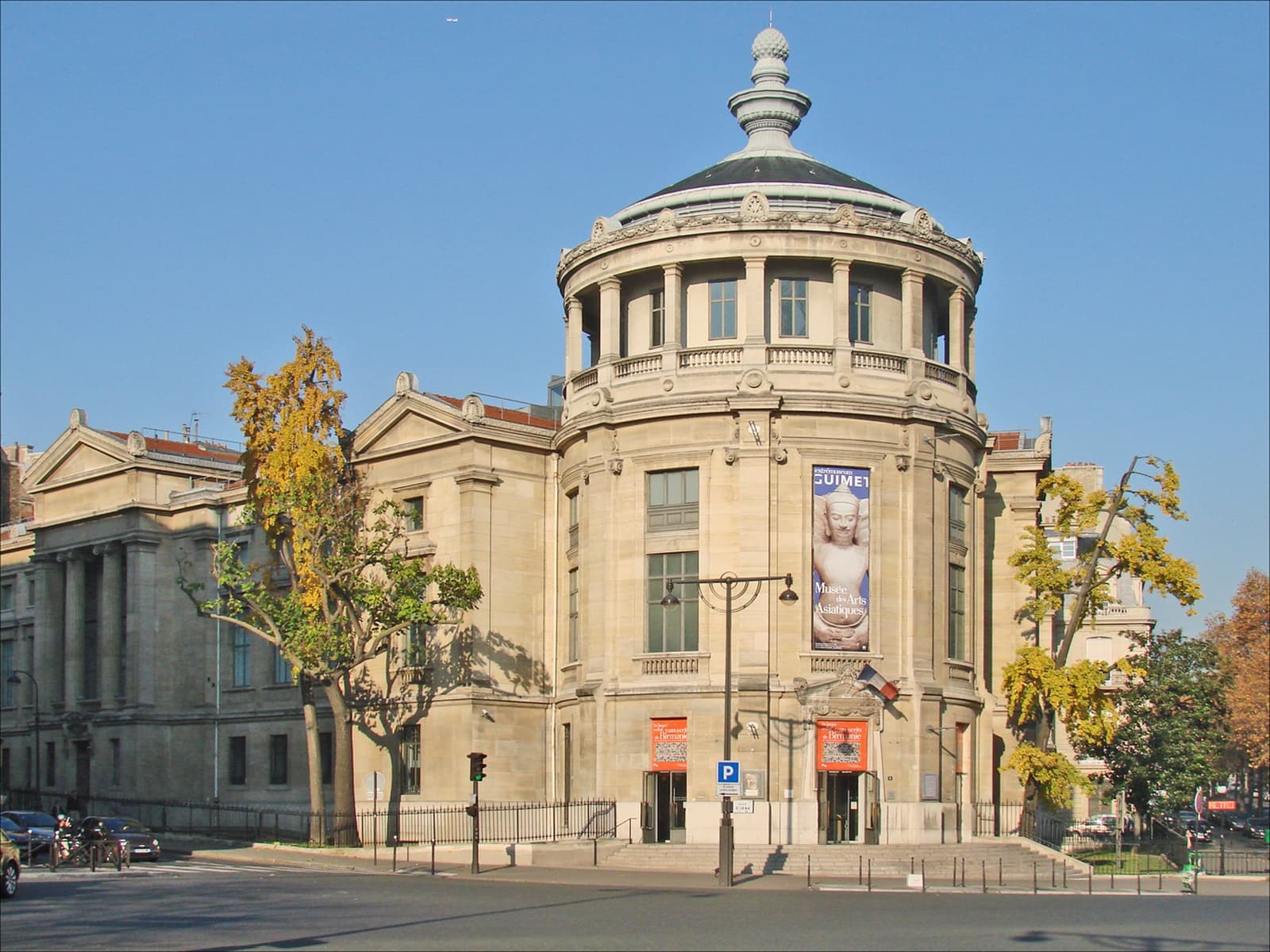
Guimet Museum
6 Pl. d'Iéna, 75116 Paris, France


Summary
The Guimet Museum, or Musée national des arts asiatiques-Guimet, is a renowned art museum in Paris, France, boasting one of the largest collections of Asian art outside of Asia. Located in the 16th arrondissement at 6, place d'Iéna, the museum is a treasure trove of artifacts and artworks from various Asian cultures. The museum was founded by industrialist Émile Étienne Guimet in 1879 in Lyon, before being moved to Paris in 1889. Guimet's travels and studies of Far Eastern religions greatly influenced the museum's collection, which includes a vast array of Chinese and Japanese porcelain, as well as objects related to the religions of ancient Egypt, Greece, and Rome. The museum also houses a special wing, the Panthéon Bouddhique, dedicated to Buddhist artworks. The Guimet Museum has a significant connection to Khmer culture, with artifacts sent from Cambodia by scholars Louis Delaporte and Etienne Aymonier. These pieces were sent to France when there were no museums in Southeast Asia, showcasing the richness of ancient Khmer culture to Europe. The museum also hosted collections from the Kabul Museum, including archaeological pieces from the Greco-Bactrian city of Ai-Khanoum and the Indo-Scythian treasure of Tillia Tepe. Whether you're an art enthusiast, a history buff, or simply curious about Asian cultures, the Guimet Museum offers a unique and enriching experience.